The Global Atmospheric Plastics Survey (GAPS) is the first of its kind in size, scope and diversity to identify one of the biggest problems facing the 21st century – atmospheric plastic pollution.
As plastics break down, they travel up in the atmosphere where they become easily inhaled, causing potential health risks. Micro- and nano- plastics are tiny pieces of plastic found in the air, blood, organs, and tissues of humans.
While plastic production has increased dramatically, only 9% is recycled.
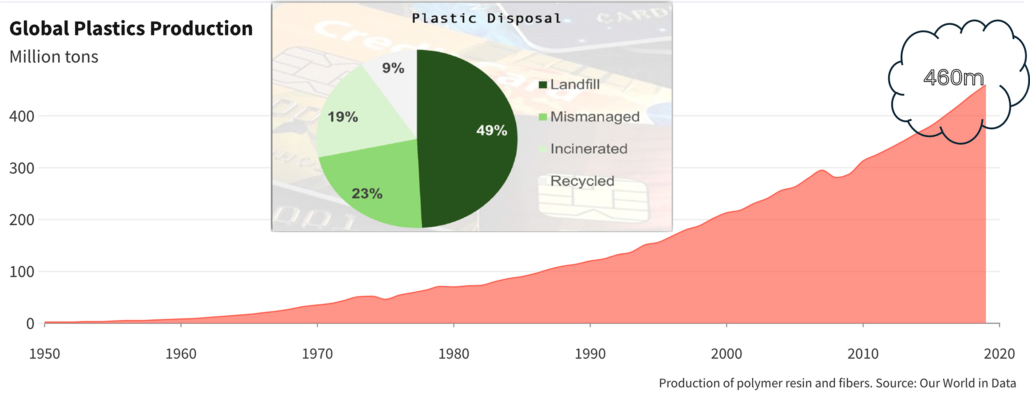
(click image to enlarge)
What is GAPS?
- GAPS is the first Global Atmospheric Plastics Survey of its kind in size, scope and diversity led by Dr. Al Gill, FRGS, Vanessa O’Brien, FRGS and Robin Milner.
- By engaging academics, mountaineers, polar explorers and the military planning expeditions to glaciers, GAPS has been able to procure a low-cost sampling channel.
- Expeditions that are chosen to participate in GAPS learn sampling protocol, receive and return samples, and thus can give their own expeditions a higher sense of purpose.
- The surface snow of glaciers represent an ideal sampling position.
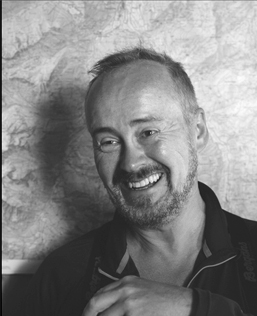
Dr. Al Gill, FRGS
Expedition Leader
Former theoretical physicist and army reservist working in venture capital with clients in North America, the MENA, Japan and across Europe. He led the proof-of-concept expedition which found microplastic in the European Alps.
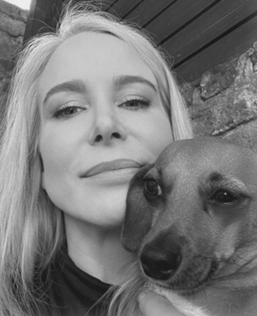
Vanessa O’Brien, FRGS
Mobilisation
Vanessa is the only woman to reach extremes on land (top of Mt. Everest), sea (bottom of the Mariana Trench) and air (space). Her unique understanding of the global effects of climate change along with her network position her to help resource GAPS’ expeditions, amplify results, and assist teams as needed.
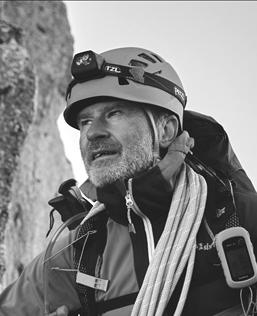
Robin Milner
Technical Lead
Robin was “in IT” when his work took him to Madrid in 2002. He’s still there 20 years later, although now teaches high-school math and physics. Robin is responsible for optimising the sampling kit and equipment.
The Expeditions
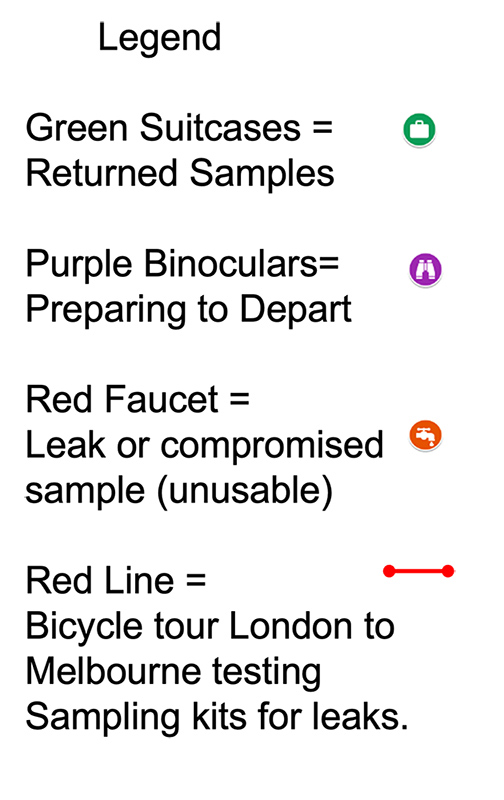
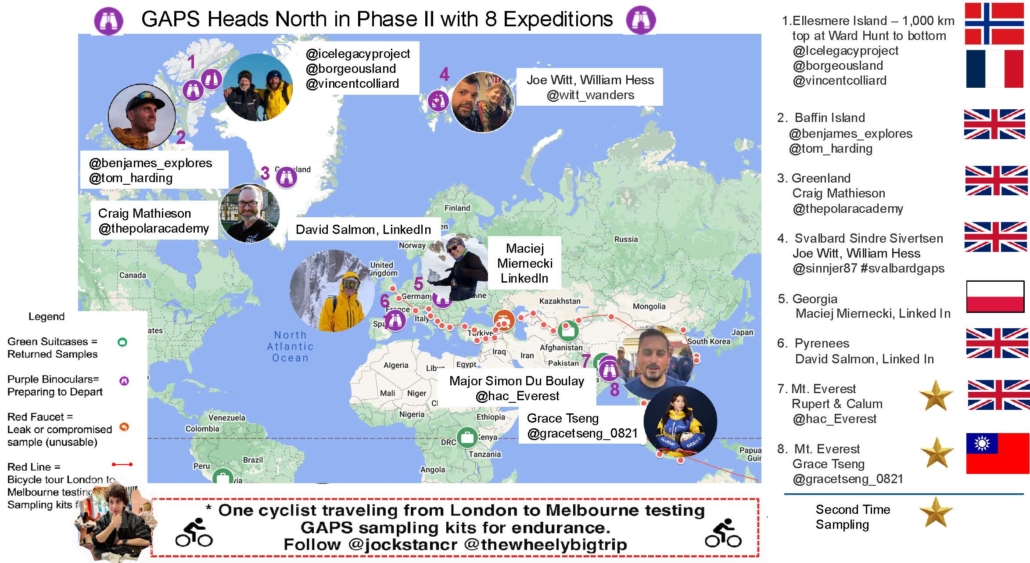
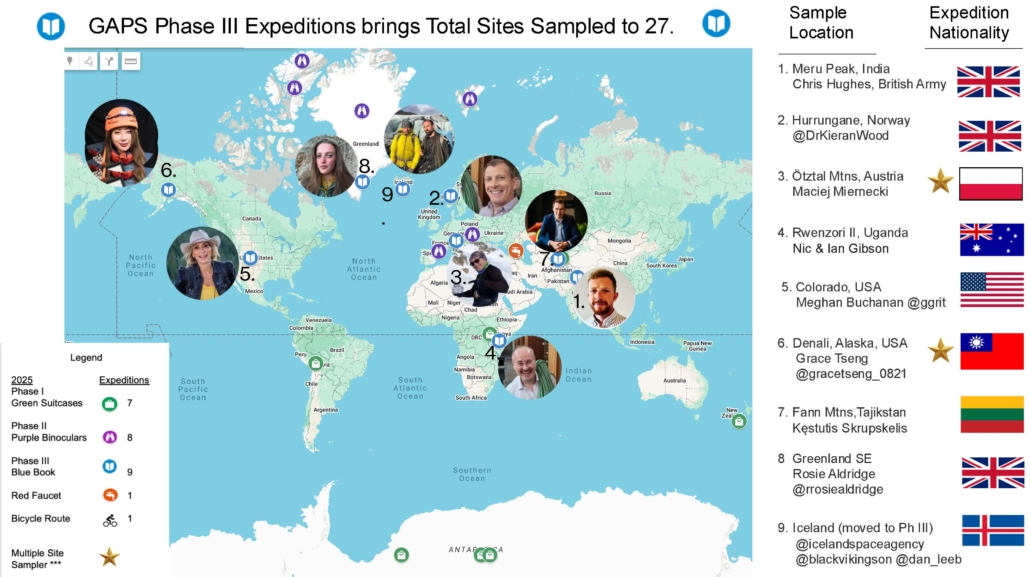
GAPS will need about 50 expeditions to get global coverage. Here are the first phase expeditions that have already provided samples.
GAPS PHASE I
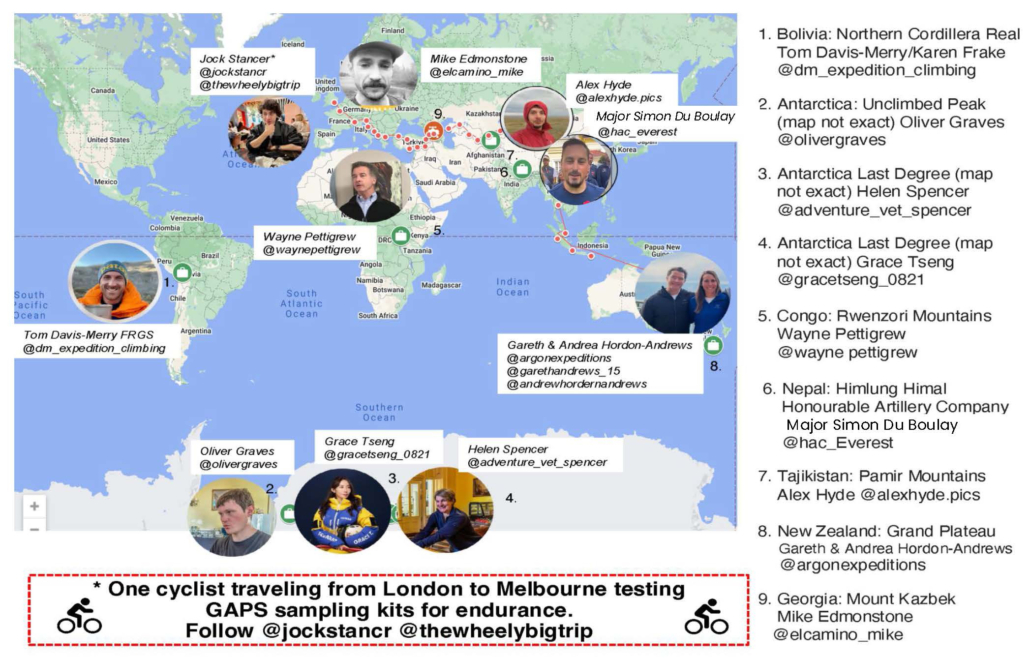
GAPS PHASE II
GAPS PHASE III
The Lab
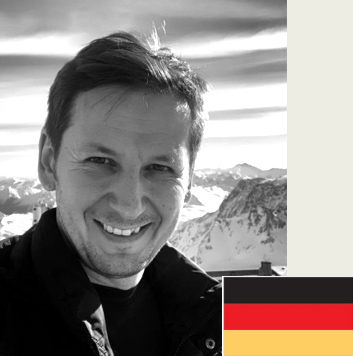
Dr. Dušan Materić, FRGS
Scientific Lead
GAPS’ scientific lead, Dr. Dušan Materić, FRGS is the Head of Microplastics at the Helmholtz Centre in Leipzig. has pioneered the technique for measuring plastic pollution in glacial snows. His laboratory is one of only a few in the world capable of measuring and categorising nano- plastic pollution.
Scientific Advisory Team
GAPS’ Scientific Advisory Team combines the knowledge of the chemistry of plastics, the physics of spectroscopy and the mathematics of atmospheric modelling. Together with Dr. Dušan Materić, this small team can dissect the results based on the glaciers we’re travelling on and the mountains we are climbing.
 |
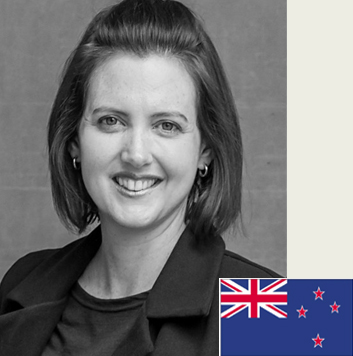 |
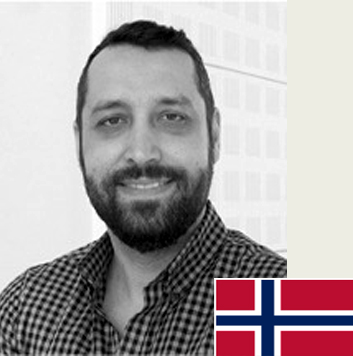
| Nikolaos Evangeliou Advisory Senior Scientist at the NILU, an independent research laboratory working on air pollution, climate change and health, Dr. Evanegliou is a specialist in atmospheric dispersion modelling. Previous work has included the study of particulates from forest fires and radionuclides from the Chernobyl disaster. |
Laura Revell Advisory Professor Revell is a world leader in the field of airborne microplastics. She works in environmental physics at the University of Canterbury, where she develops methods to measure their concentrations and models their impacts on climate. |
Results & Media
Dr. Materic finds dominant polymer types including tire wear, polystyrene and polyethylene particles (41%, 28% and 12%, respectively) in the European Alps.
Mountaineers now scaling more peaks for first global study of nanoplastics, which can enter lungs and bloodstream.